Showing posts with label Religion. Show all posts

Sunday, December 18, 2022

Out of Many ... One

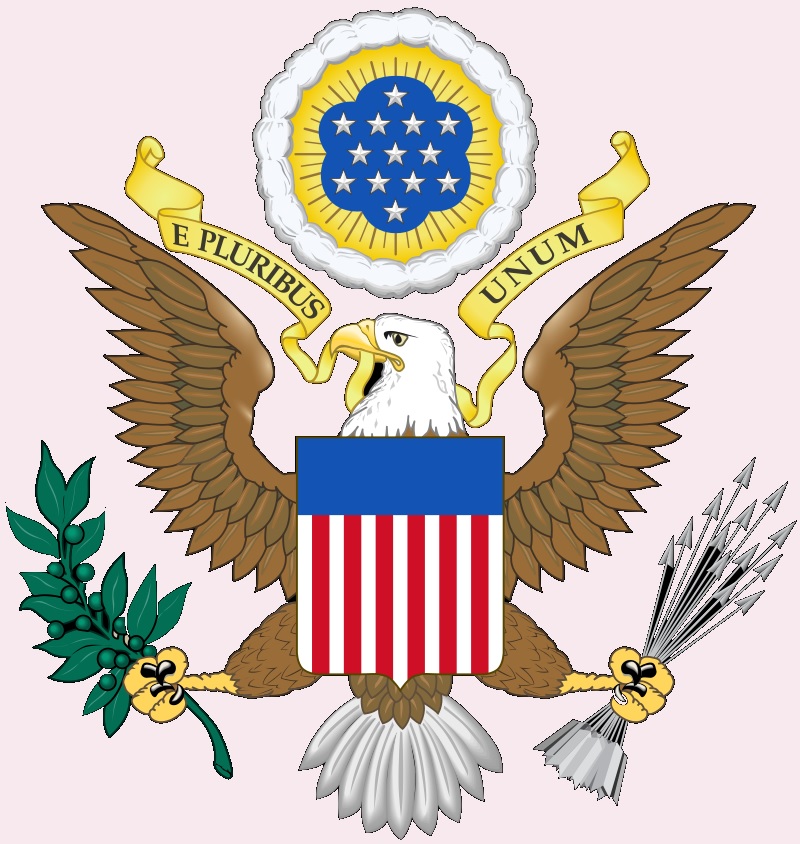
E Pluribus Unum 

From grade school and up, we have always been taught that our country, the United States of America, is a diverse country founded on "Freedom of Religion" and "All Men Are Created Equal"; in 1972 an amendment was added calling for "Equal Rights for All" (men and women). And in more recent years, there have been calls and laws for inclusivity: acceptance and tolerance of all genders and personal gender identities, acceptance of ethnicities, and respect for all religious beliefs.

So where have we gone wrong? While racial persecution, religious prejudice, and gender stereotypes have, sadly, existed in our country since its inception, it has become a loud-mouthed blight in more recent years. Instead of the acceptance of our common bonds of being Americans and HUMANS, there has been anger and hatred acted all too often. And in a country invaded and founded by immigrants, too many have forgotten our own past journeys and the ancestors that fought their way to our shores.

In 2022, 245 years after the "Founding Fathers" wrote the United States Declaration of Independence and founded our country, we are still fighting many of the prejudices and injustices that our ancestors fled from. All too often we see reminders that the UNITED States of America is not nearly as "united" as, allegedly, it was intended.

It has been said that those who resent and criticize other religions are insecure in their own. While every faith has zealots that spout hate and evil, those are actually the minority, and often those who have limited knowledge of their teachings. The teachings of almost every deity and higher power espouse love of fellow human beings and kindness to all living beings. Hatred of others does not defend your religious beliefs, more often it ignores those teachings.

In the United States, just in the months between December 2022 and March 2023, just one-third of the year, we (collectively) observe at least 17 religious observances:

Feast of the Immaculate Conception  December 8    Christianity

Bodhi Day/Rohatsu (Japan)       December 8 Buddhism

Our Lady of Guadalupe   December 12           Christianity

Hanukkah     December 19-26*  Judaism

Winter Solstice/Yule   December 21  (northern hemisphere)  Native Americans/Pagan

Christmas     December 25           Christianity

Kwanzaa       December 26–January 1  African American

Feast of the Holy Family December 30           Christianity

****2023

Solemnity of the Blessed Virgin Mary January 1     Christianity

Christmas     January 7      Eastern Orthodox Christianity

Lunar New Year     January 22     Confucianism/Taoism/Buddhism

Maha Shivaratri     February 18 Hinduism

Ash Wednesday     February 22 Christianity

Orthodox Great Lent begins       February 27 Eastern Orthodox Christianity

Purim March 7*      Judaism

Holi    March 8        Hinduism

Ramadan begins (30 days) March 23* Islam (dates dependent on the sighting of the new moon crescent)

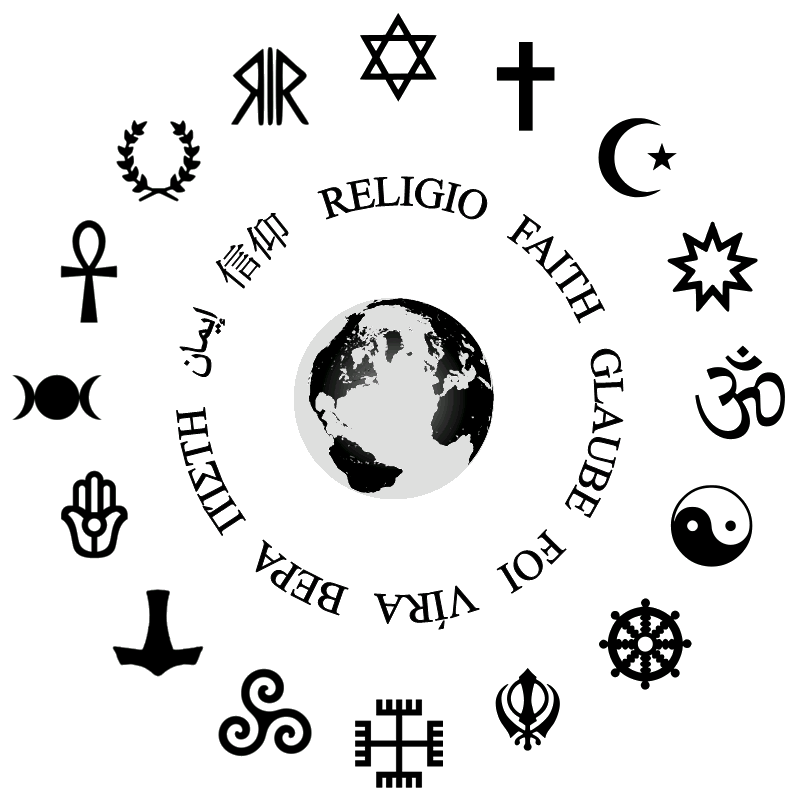
In America, we have multiple religions and beliefs observed including Agnostic, Atheist, Buddhist, Druid, Hindu, Islam, Jehovah’s Witnesses, Jewish, Lutheran, Mormon, Muslim, Eastern Orthodox, Latter-Day Saints, Pagan, Protestant, Roman Catholic, Scientology, Sikh, Taoist, Wiccan, and more. 


Frederick Douglass once said, "Those who profess to favor freedom and yet depreciate agitation are people who want crops without ploughing the ground; they want rain without thunder and lightning; they want the ocean without the roar of its many waters. The struggle may be a moral one, or it may be a physical one, or it may be both. But it must be a struggle. Power concedes nothing without a demand. It never did and it never will."


Others have said it, simply, "Can't we all just get along?"


Wishing you all a happy and healthy Holiday Season (no matter which way you say it), with warmth, friendship, and love by your side. Here's to hoping for a more unified, peaceful, loving, and accepting 2023... and beyond.



Wednesday, February 23, 2022

The Ugly Word, Prejudice


I am not going to pretend that racism and prejudice disappeared, although there were SOME (not enough) strides being made. The "closet racists" seemed to be keeping their heads down (mostly) and I guess too many of us let down our guard THINKING things had gotten better.


But in the past few years some folks seem to think it is not only alright to be prejudiced, but it is now perfectly fine to shout it to the world. It's disgusting. People of color, females, LGBTQ, religious targets, and immigrants (even legal) have been targeted in both subtle and out-loud obnoxious words, acts and violence. There has also been a heightened suppression of freethought where real-life topics are considered taboo.


A few months ago, parents in a North Carolina school district complained and had a very favorably reviewed book pulled from the school's curriculum because they felt the content was too ugly instead of recognizing it as a story of moral failure and coming of age. Quite recently another North Carolina school district banned a book about racism and a black teenager trying to follow the teachings of Martin Luther King Jr. And these incidents are not limited to the deep south… Just this past week some Indiana parents were given the option to take their children out of Black History Month lessons. Meanwhile in NYC, Asians are being targeted for attacks.


I was recently intrigued by a notice of a church group in the Midwest that offered use of their database to search genealogy and ancestry. Since this is a topic I am very interested in, I thought I might sign up, however I took the time to read their "terms of use". Imagine my surprise when I read "You should not submit… those names gathered from unapproved extraction projects, such as Jewish Holocaust victims". I did ask rather pointedly if this group was "Holocaust deniers". I did get a replay saying "Not deniers… just you should only use names from those you have permission of" and that doesn't include deceased.


Yes, I took umbrage at that explanation, my family history includes those who were exterminated in the Nazi camps, and yes that also means many links to other relatives were lost as well. Since most genealogy searches include the past generations, many of whom are not living, maybe I am being sensitive, but I felt the comment was a direct hit on Holocaust victims, aka, Jews.


Growing up I was very aware that many of us practice different faiths even within the same family — and I was aware that we still could love and respect each other. Why is it so hard for others to accept the differences among family members, friends, neighbors, and our society as a whole. Why should the congregants of synagogues, black churches, and Islamic temples have to fear going to their house of worship? Why should the skin color(s) of a couple mean more than how they treat and respect each other? Why should women and men have pay disparities, or the wealthy be treated with any more respect than other incomes. Why should sexual preferences be a target of so-called moral outrage?


People are people. All hearts are red.


Wednesday, April 21, 2021

WE ARE ALL DIFFERENT…

...and in many ways, we are all the same. So why is there so much hate these days? Why does looking or being “different” create so much suspicion and animosity?


In school kids make fun of other children who “look” different, it can be a child with prophylactics, who wears glasses, or even who comes to school in tattered clothes because of family finances. Maybe the child comes from a different culture which has a unique clothing style, or even wears a pendant of their faith. Some can make fun of children who may have a different skin color, or are overweight, or can’t speak fluent English, or anything that is different from “the cool kids”. Parents and teachers need to teach children about diversity in both culture, lifestyle and economic means.


Anti-bias education, at home and in the school, is a crucial step to opening children’s minds to acceptance. Things like teaching children that occupations are not gender-specific will help to bridge the gender gap, knowing that a little girl can grow up to lead a construction crew, or a little boy can study to be nurse (as examples) are ways to help children live up to their own personal potentials despite societal norms. Encouraging children to take personal pride in their cultural traditions AND accepting others who do the same will help them as they grow up and are exposed to diversity.


Exposing children to anti-bias books (appropriate for their age) will help to open their minds to peoples’ differences and humanity. It’s important not to stay quiet or discourage conversation — if the child questions how a girl can grow up to be the President for example, don’t admonish them. Encourage conversation and help them, through subtle questions and discussion starters, see all the things they are capable of and that no profession is specific to one gender. Ask them about hobbies and dreams. Maybe a young boy will tell others he likes to sew or crochet and the other children giggle, don’t admonish but tell them about fashion designers like Michael Kors or the tailor down the street. Help to foster interest in other children’s cultures and traditions by giving an opportunity to share fun customs and possibly sample cuisines.


When parents and teachers have open minds and accept the differences EVERYONE has, it is easier to teach and help children to learn anti-bias behavior. It’s not too late to start. Watch the words you use, avoid stereotypes, open yourself to learning about others and offering knowledge about your own background. Stress the similarities, but don’t ignore the variety of things others can bring to any conversation or experience. Let’s work on being humans first and accept those around us without prejudice.


Wednesday, October 14, 2020

Religion and Interpretation


No one practices their faith exactly the same way as the next guy, and I’m talking about the SAME religions. Everything is subject to interpretation. There’s an old joke in Judaism (my own faith) that goes, “If you ask two Rabbis you’ll get three opinions.”


Almost every religious reference, NO MATTER WHICH ONE, is accompanied by “…and by this, it means…” (no wonder TV commentators think they can tell the viewers “this is what you heard”). In their defense most religious volumes have been translated from their original language to the current language of the people. It’s a well known fact that you can lose a lot in the translation.


If you read scripture or religious tenets OF ANY FAITH, you can really find yourself horrified at some of the writings.

·       “If a man have a stubborn and rebellious son, which will not obey the voice of his father, or the voice of his mother, and that, when they have chastened him, will not hearken unto them: Then shall his father and his mother lay hold on him, and bring him out unto the elders of his city, and unto the gate of his place; And they shall say unto the elders of his city, This our son is stubborn and rebellious, he will not obey our voice; he is a glutton, and a drunkard. And all the men of his city shall stone him with stones, that he die: so shalt thou put evil away from among you; and all Israel shall hear, and fear.” [Deuteronomy 21:18-21]

·       I decided to order a man to lead the prayer and then take a flame to burn all those, who had not left their houses for the prayer, burning them alive inside their homes.[Bukhari 11:626]

·      Think not that I am come to send peace on earth: I came not to send peace, but a sword. For I am come to set a man at variance against his father, and the daughter against her mother, and the daughter in law against her mother-in-law. And a man's foes shall be they of his own household.[Matthew 10:34-35]

Are you cringing yet? These are just three of MANY examples from the Old Testament, New Testament, and the Quaran.


The other day, on Facebook of course, someone posted a meme that showed a picture of Judge Amy Coney Barrett (a Catholic) and Rep. Ilhan Omar (a Muslim) which was headed, “When her religion is a problem, but hers isn’t”… My response was an innocent “Religion shouldn't matter in either case.” Another FB member (whom I don’t know) responded abruptly about how violent the Quaran is and “Muslims have been fighting Christians since Mohammed!!”


Indeed there have been many religious wars through the centuries and ALL of our spiritual texts do contain items that seem callous or violent. But, it is my opinion, that every human being, while respecting the main preaching of their chosen faith, must decide on what kind of a life they want to live. No matter what you call your higher power, HE (or SHE) has also given commandments to love your fellow man, to always strive to be better, and to make this world a better place.


Surely we’ve all sinned, sometimes by error and sometimes in anger. But really, are we that different from our fellow beings. We feel pain, we love, we cry, we bleed, and in the end we ALL die.


.

Monday, October 10, 2016

Renewal ~ #MondayBlogs


We’re in the middle the Jewish holidays, last week was Rosh Hashanah (beginning of the Jewish New Year) and this coming week is Yom Kippur. Traditionally most people who observe the holiday take time off from work to pray and reflect on their actions, to ask forgiveness for slights don to others (intentionally or unintentionally) and to forgive those who might have slighted us.
I’ve been lucky (workwise) in recent months and have dealt with multiple deadlines; so my first reaction after sundown the second day of Rosh Hashanah as I hurried back to my desk (yes I work from home) was thinking that I LOST two days I could have worked! And then I caught myself… I hadn’t lost anything, I reflected on who I was and who I was trying to be. The self-reflection helped me to learn WHY I did the work I do, it helped me to understand what my priorities are.
In addition to the peacefulness I feel after making earnest attempts to forgive others that I had been angered or hurt by, I also have gained valuable time in my life that isn’t wasted by tears and resentment. My reflection has forced me to face my own failings and has given me the encouragement to be better, kinder, and more productive. The time I spent in prayer and thought also made realize all the people in my life and all the things I have that I am so very grateful for.
I can’t promise to always think before I act or speak, and I can’t be sure I will always react kinder and fairer when something or someone “rubs me wrong”, but I know it is important to try. If one ten-day period (the Days of Awe) were enough to guarantee improvement, we wouldn’t need this yearly ritual. The ten day period between Rosh Hashanah and Yom Kippur is a time for self-reflection, repentance and renewal. The process of our atonement concludes with Yom Kippur which this year begins this Tuesday at sundown and goes through Wednesday at sundown.
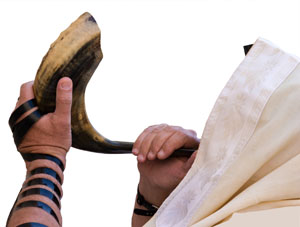
There is irony in our New Year’s observance; Rosh Hashanah actually begins on the first day of the seventh month. There are three other New Year observances on the Jewish calendar but Rosh Hashanah is the most major and yet all that makes it most unique is the blowing of the shofar and preceding Yom Kippur so closely. The shofar, a ram’s horn, allows each listener to interpret the message they hear, a patterned series of blasts that seems to reach into our hearts and minds. This is a period of renewal, we figuratively wipe the slate clean.
I gave myself some extra time before resuming my work and when I did start again I felt less pressure and in a happier mood. And even though I was much closer to deadlines… I didn’t miss a single one.
It’s important to take a few steps back now and then, to take a look at ourselves, re-organize our priorities, be more accepting of others, and be thankful for what we have. It definitely makes for a nicer life.


Monday, September 26, 2016

Welcome to Banned Book Week ~ #MondayBlogs


While the subject isn’t very welcoming, the very fact that many of us live in a society where we are able to challenge the banning of books and even be able to get our hands on most on the list and actually read them is good news. So long as there are people who get angry over the censorship, readers who devour the words, and writers who continue to produce new books — it’s good. There are some countries where certain books are actually forbidden by law! In several free countries while specific books are removed from libraries and some book stores, it is not against the law to actually read these titles. It’s just more difficult to get our hands on them.
One of my favorite books has been banned in previous years; ironically the story is about book censorship, book burning, and the control of free thought. Fahrenheit 451 was about a futuristic world where free thinking was not only discouraged but punishable. The idea was that if no one was allowed to think for themselves there would be no disagreements and with no disagreements everyone would get along. And yet even in this world there were “Firemen” because there were people who were defiant and those books “needed to be burnt.” Fahrenheit 451 is allegedly the temperature at which the paper in the books would ignite.
A few books previously banned by governments are: Alice’s Adventures in Wonderland by Lewis Carroll (China); American Psycho by Bret Easton Ellis (Queensland, Australia); Animal Farm by George Orwell (USSR, North Korea, United Arab Emirates); Catch-22 by Joseph Heller (Strongsville, Ohio; Dallas, Texas; Snoqualmie, Washington); The Da Vinci Code by Dan Brown (Lebanon); Grapes of Wrath by John Steinbeck (California); The Lottery (1948) by Shirley Jackson (South Africa); Peyton Place by Grace Metalious (Canada); The Satanic Verses by Salman Rushdie (Bangladesh, Egypt, India, Iran, Kenya, Kuwait, Liberia, Malaysia, Papua New Guinea, Pakistan, Senegal, Singapore, Sri Lanka, Tanzania, Thailand); Sophie's Choice by William Styron (Lebanon); Spycatcher by Peter Wright (UK); and Tropic of Cancer by Henry Miller (US, South Africa). There are so many more.
In recent years according to the American Library Association many books are being listed as banned because of diversity, homosexuality, explicit sex, religious viewpoints and offensive language. As a writer I began to think of my own works and which (if I only had more prominence) of my books might be banned by these standards. I definitely have explicit sex and some foul language in several of my novels. One book centers on a Pakistani Muslim immigrant married to an American Christian. Another books deal with the trauma of rape. One of my short stories involves an interracial love affair. And while they are not the main characters I do have a Lesbian couple in a book.

I guess I am just one of those defiant writers. 
Be defiant — read a Banned Book today.

             9/25-10/1/2016

...

Monday, June 27, 2016

Children Learn From Their Parents ~ #MondayBlogs


Many… many years ago I got a Summer Stock gig in upstate New York. It was the summer of 1974 and I was excited. It was my first time living away from my parents’ home and on my own.

I met a lot of new people that summer, they came from all over the country and to a kid who grew up in “da Bronx”, NYC, it was interesting to meet so many and hear about all of their experiences. There was no shortage of fun times and parties and we each formed our own circle of pals.

I hung out with the light and sound crew (I was there as a lighting technician), I was the only female in this small group. One of the guys, I’ll call him Howard to protect his identity, came from a small town in Vermont. It was Howard’s first time away from home as well, his first time meeting people who didn’t live in his small town.

The first day we met I was wearing a Star of David pendent and I noticed that he was staring at me whenever he thought I didn’t see. Finally I asked him what was up. He apologized and a few minutes later he sat next to me at the dimmer board and asked me if I really was Jewish. I said yes and asked him why he wanted to know. He pointed to my necklace.

I was not expecting his next words. They were innocent and knocked the breath out of me.

“I never met a Jewish person before. I was always told Jews had horns.” And he quickly apologized. Howard told me that his parents, aunts and uncles all lived in that small town and went to the one church that everyone went to. Everyone was the same where he grew up and they all said that Jews had horns.

I laughed nervously and said, “Well we don’t.”

He asked a lot of innocent questions about my religion, my Spanish surname, growing up in a big city and more. In Judaism it’s a mitzvah (commandment) to teach and so I was happy to answer his questions, questions which came from pure curiosity — he was seeing the world outside of his small home town for the first time.

Howard called his parents that night to ask if they had ever seen a Jew with horns and they admitted that they never did. When he asked why they told him that there were horns they said that’s what they had been told by their parents as they grew up in that same small town. They expressed nervousness when he said he had a Jewish friend but at his insistence they decided to let him decide for himself who he could be friends with.

I did meet them later in the summer and they were actually very nice people. I don’t know what happened to Howard and his family when the summer was over, I went home to plan my wedding and we never really stayed in touch. But I would like to think that just maybe they stopped telling people the stereotype they were raised with. Just maybe they were a little bit more accepting of people who were different than them and maybe there was a little less prejudice in that small Vermont town.

Don’t teach your children prejudice because they like to believe that Mommy and Daddy are always right. Children learn from their parents.

Monday, November 23, 2015

What is religion? ~ #MondayBlogs


Religion is a belief system, a road map of sorts, something to give us all guidance through life. Yes, many of these belief systems have a Deity (mono or poly theistic) that we direct our prayers and hopes to, but ultimately the rules that are dictated by a particular belief system are designed to help us function and thrive in this world among our fellow humans.

Religion should not be used as a mask, a false front or an excuse for intolerance or cruelty. There are extremists in every religion who use interpretations of commandments to their own self-serving benefit. Unfortunately when these extremists represent themselves as spokespersons of the faith, there are others who let their resentments rule. Religious precepts are misunderstood and prejudice begins.

Some religions are philosophies, a way of living life using positivity, compassion, and cooperation. There are people who believe in a higher-power, but not a god – nature, the earth’s elements, their fellow man/woman, and their own inner strength. Atheism, mistakenly cited as a belief that there is NO god is really a lack of belief that there is a god — it’s a minor difference but not as negative as some claim. Agnostics neither claim that there is a god, nor do they claim there isn’t; in many ways agnostics are relatively open-minded to possibilities.

“The term interfaith dialogue refers to cooperative, constructive and positive interaction between people of different religious traditions (i.e., "faiths") and/or spiritual or humanistic beliefs, at both the individual and institutional levels.” [Wikipedia] An open dialogue between people of different faiths is not an attempt to merge or dissolve religious beliefs; rather it is a way to work together with mutual respect. Learning about other faiths should never be seen as an affront to one’s own religion or belief system. Education is, in Judaism, a mitzvah, a commandment and something we should all be doing; other faiths have similar edicts.

It shouldn’t matter if you read the King James Bible, the Hebrew Tanakh, the Hindi Sanskrit, the Buddhist Tipitaka, or the Muslim Quran… it shouldn’t matter if you study the sky and the stars, or let the soil run through your fingers, or if you are Wiccan, Atheist, Jehovah's Witness, or celebrate Kwanzaa… we are ALL quite literally in this thing TOGETHER. All religions and belief systems share commandments and principles that encourage the love of family, respect for life (human and animal), and provide guidance to help us share this great planet.

I am pleased to say that my family is interfaith. While we each remain true to our individual upbringing, it is a joy to share our unique cultures with each other. It is a blessing to observe the Ruach (Hebrew word meaning energy and spirit) in our rituals. Ultimately our family thrives on LOVE.

So be who you are and practice your faith. And if you find it hard to be compatible with others, don’t meet it with anger and hostility — use it as an opportunity to LEARN about your own and other religions. You’ll be pleasantly surprised at how many similarities there really are. 


Faith should never be divisive; we are all one people in the long run. 

Monday, October 26, 2015

Everybody’s Talking ~ #MondayBlogs


On the average every year from late summer through early November everyone is buzzing about who is running for what office, rumors and meme’s overrun social media, and invariably some “friendships” are ended after heated exchanges.

Growing up all of the neighborhood parents painstakingly instructed all of us kids “Never discuss politics or religion”. To that I say HOGWASH. I believe discourse between opposing views is necessary to growth.

The meaning of the word discourse is “written or spoken communication or debate”; the key term is communication. When I was in junior high school my social studies teacher assigned all of the students to debate teams. Ironically we each had to argue the opposing view from our personal beliefs. The class of 30 (yes, large class sizes) was irate as we were tricked into voicing our honest opinions on subjects such as gun control, abortion, euthanasia,  the draft and other such hot-button items only to be told we had to argue against the very things we believed in!

Mr. L explained that the only way we could be sure of our convictions was to understand all sides and to respect the opposing views. Respecting other viewpoints does not mean we agree, as a matter of fact our willingness to hear other views indicates that we have confidence in our decisions; likewise closing our ears and minds to different beliefs may even be from fear that we could be easily swayed.

Now remember I called this exchange discourse. Discourse is not argumentative or insulting, it’s not threatening and should certainly not include generalizations based on race, ethnicity, gender or religion. Yes we are all guilty of chuckling and sometimes passing along a funny meme or two, sometimes these memes are applauding a candidate or political office without insulting anyone — and yet the vitriol that follows  gets out of hand.

These are the interactions I don’t care to entertain. When an otherwise intellectual conversation is polluted with nasty barbs, insults or profanity then the positive exchange of knowledge and ideas ceases to exist; when someone is being verbally (and sometimes physically) attacked thinking logically often flies out the window and the result is usually anger, yelling, cursing and insults that have no bearing on the original disagreement.

So let’s discuss the issues and stay informed, but leave the fighting elsewhere.


By the way, the next United States Election Day is ‎November 3, 2015. Have you registered to vote yet?


Monday, September 21, 2015

The American Predilection to Prejudice ~ #MondayBlogs

I recently watched the movie "Black or White" starring Kevin Costner and Octavia Spencer; it's a movie about a recently widowed white grandfather who is drawn into a custody dispute over his biracial granddaughter who he has raised all of her life. Overall the movie was, in my opinion, terrific. Admittedly the story does include some stereotyping: a wealthy white grandfather with a drinking problem, a crack addicted and absent black father, and a loving black grandmother who lives with her large extended family in an unsavory part of town. Personally I think those stereotypes were used to emphasize that no side is perfect or better than the other

During one of several poignant courtroom scenes where the father's family lawyer Jeremiah (played by Anthony Mackie) tries to make Elliot (played by Costner) out to be a bigot, Elliot makes a very dramatic and thought-provoking argument:

Jeremiah: Do you have a problem with racial prejudice?
Elliot: Is that what you want to make this about, Jeremiah? Really? Well then let's do it them. You've wanted to ever since Rowena first dragged you into this. So yes, we're different, you and I. You want to submit that? Submit it. We have different skin color. Is that the first thing I notice when I see a black man, the color of his skin? Yes. Submit Away. Because I can go ahead and submit that it's the first thing you see when you see a white guy. Now I don't know why that is any more than I know why when I see a good-looking woman, the first thing I notice are her breasts, because I do. But if I move on to my next thought quick enough, I'm not a pervert... I'm not a bad guy. I'm just mildly flawed. It's the same thing with race. It's not my first thought that counts, it's my second, third and fourth thought. And each and every case I'm in it comes down to the same thing, the action and the interaction with the person I'm interacting with. 
Noticing a person's physical description whether they are black or white, male or female, fat or thin, tall or short doesn't make a person a bigot. The meaning of PREJUDICE according to Google is a "preconceived opinion that is not based on reason or actual experience". Prejudice is when we allow that first look, that first impression, to make a difference in how we view an individual. We teach our children to notice the things around them, we ask our police officers to note a person's description, we hope drivers are observant about the people and places they pass. If you look with your eyes open you will see differences in our appearances. I am a short olive-toned, plumper than should be female and if you notice any of that you are simply looking AT me... BUT if you allow any of that to think that I am less or more worthy of fair treatment than any one else simply based on my appearance, then that is prejudice.

We are all raised with some preconceived notions... a white picket fence around a suburban house means a happy family... an eccentrically dressed older woman sitting on a park bench is crazy... a well dressed white man driving an expensive car is highly respected... a young black child with a torn and dirty shirt has an irresponsible single mother. We've been exposed to many of these stereotypes in our childhood homes, on TV, through single incidents. As "Elliot" said though, move on to your next thought; think of the possibilities, learn more.

As a society we've become lazy. Too many people don't want to take the time to learn about a person and about their character. Meet me, talk with me; read my resume if I am looking for a job instead of tossing it onto the rejection pile when you see the Spanish surname. Don't assume when you see the Star of David I sometimes wear that I fit every negative ethnic joke you ever heard about Jews. And if you decide I have the qualifications for the job don't pay me less than you would a man working the same position.

Yes, we have differences. Even people of the same ethnic group, gender, age range, religion have differences. And yet we are all alike, we all feel pain and joy, we all enjoy being loved, we all need sustenance, and we all need air to breathe. Even identical twins can have very different personalities, skills and desires. 

Prejudice is stopping at that first look or that first impression. Prejudice is not thinking past stereotypes. Prejudice is allowing bias to dictate how you treat someone simply because you can't or won't take the time to move on to your second, third and fourth thoughts.

Respect people for WHO they are and not for WHAT they appear to be.
Make time to learn their traditions, cultures and language.
Give meaning to the words Brotherhood and Humanity.


Monday, September 7, 2015

What is religious freedom? ~ #MondayBlogs


The subject has been all over the news – a government official refuses to issue marriage licenses for gay couples; a flight attendant won’t serve alcoholic beverages to passengers; a hobby store refuses to carry any merchandise from all but the owner’s chosen faith; there are stores that won’t open on the Sabbath; holiday displays on public property are considered taboo; one person wants school prayer and another one doesn’t; religious head coverings are questioned; and so many more topics such as is it insulting to some to have the words “in God we trust” on our paper money?

At what point does it become enough? What does it mean to have religious freedom? And is it always persecution if someone loses a job if that religious belief isn’t allowed to be practiced? It seems it’s become too easy to yell religious discrimination when someone doesn’t get their way. There are many factors to consider.

First of all, let me be clear, this is an OPINION piece, MY opinion – there will be people who will disagree and I respect your right to another opinion; however I expect my right to be respected for my beliefs, so please read on…

If you are doing a job with specific responsibilities and tasks and you fail to abide by those rules, is it religious persecution to fire you? I believe that if you took the job with a clear understanding of expectations or if you took a vow to uphold things like, well, like the United States Constitution, then I feel it is not persecution to expect you to do your job. A refusal to do your job should be cause for dismissal or impeachment. Obviously if your boss makes a new rule after you’ve signed on and it would cause you to violate sincere and sacred beliefs, I do think he or she (the boss) needs to make accommodations. By the way, an oath to uphold the constitution is the same even if a new amendment is added. If you are still vehemently opposed to the assigned tasks then it is up to you to give notice and find another job.

In the case of the flight attendant refusing to serve alcoholic drinks, conversion to her faith was made by her choice after already being employed in that position. Although I think it is an unfair burden to ask other attendants to do that part of your job, I do think the individual should sit down with both management and then co-workers to see if there is a solution that would work for all; however, like I said, it does place an unfair burden on other attendants and they should not be penalized if they refuse. The best solution might be to sit with management and find out if there are any positions in the company where this responsibility is not required. Once again since the choices that were made that changed the circumstances belonged to the flight attendant, the ultimate responsibility to correct the situation should be on the shoulders of the attendant.

Head coverings are a different situation. Is there a dress code or uniform it violates? Does the head covering change your physical appearance significantly as in a photo ID? Or is your boss simply concerned that your head covering might offend customers or co-workers? Deciding on whether a head covering is permitted should be considered by individual cases and circumstances. If you’ve been wearing this garment since you took the job and the boss has a sudden change of heart, then this can indeed be discriminatory if you are fired (or in many cases not hired). In the case of official uniforms (it varies between a store clerk uniform or a military officer for example), if the head covering drastically alters the uniform and the uniformity is necessary (such as military) then it might be refused and may be perfectly legal and non-discriminatory.

If you observe the Sabbath and have made it clear during the hiring process that you cannot work that day, if the employer still hires you it would seem to be an understanding that you will not be held responsible; however when a busy holiday season arrives and the boss now demands you put in that specific extra day, if you refuse and you are fired, that sounds to me like discrimination. Many schools allow their students to take off, or might even close for the day, if there is an observance of a religious holiday. If the school is not closed, important and mandatory tests shouldn’t be scheduled on days where observant students would be forced to choose between failing the test or violating their religion. Federal laws require schools to make reasonable accommodation to the religious needs of students and employees in observance of holy days.

According to the Union of Orthodox Jewish Congregations of America “Federal law requires an employer to "reasonably accommodate" an employee's religious observances, practices and beliefs unless the employer can show that accommodation would cause an "undue hardship" to the employer's business. What constitutes "reasonable accommodation" and "undue hardship" depends on the facts unique to a particular situation. Essentially, an employer must attempt to create a structure permitting employees to practice their religious beliefs while still maintaining their jobs. In some cases, accommodation may not be possible.” Reasonable accommodations and undue hardships may be interpreted differently between individual, but I think the key phrase maintaining their jobs is important.

I really like the way this Reverend explains the meaning of religious freedom: "Religious liberty is guaranteed in this country. But that does not mean that every job needs to bend to your particular interpretation of your faith," United Church of Christ's Rev. Emily C. Heath writes. "If you really believe doing your job is violating your faith, then stepping aside would be a small price to pay for the love of the Gospel."


In the meanwhile, let’s try respecting one another and value both our differences and our commonalities.


Monday, June 15, 2015

Tolerance, Bigotry and the FaceBook Friend Button ~ #MondayBlogs


Our parents tried to teach us to lead confrontation-free lives with the cautionary advice “Never discuss politics or religion.” But did we listen… of course not. And with the advent of social media networks it has become easier than ever to give ourselves voice about anything and everything.

Does anyone really change the way someone votes in the next election? I’m sure that we can all play a part in spreading rumors and political mudslinging, but does it really have an effect where it actually makes a difference? I honestly believe that most people opinionated enough to support a cause are not relying on Facebook or Twitter for research; most people will read newspapers (hopefully several different sources), attend political rallies, research history in library and visit a candidate’s web-site to determine how they will vote. People who read a Facebook post about a hot-seat item will most likely hit the LIKE button or UN-friend the author – and then there are the FEW who will research the alleged quotes, past behavior, and political history with an open mind.

How much power do your rants and ravings on FaceBook really hold?

Is it a good thing that we express ourselves in a public forum? Yes it is. Is it worth getting into an argument online? Probably not.

In my opinion, most people voicing their political views on Facebook have already made up their minds and aren’t willing to discuss the issues no matter how many rationales you post to them. Do people like to argue? I don’t think so… but arguing on-line and being the one who started it all, now that is sense of power. Personally I like having opinions and I like to express myself, I am after all a writer aka one who communicates. For me reading someone else’s opposing view is a chance for education and personal growth, it helps me understand different perspectives; however I don’t welcome hateful speech, claims without sources, name calling or threats. I make it known on my social media pages and blogs that I can delete AT MY DISCRETION any commentary that if considered offensive.

How many of you participate in political/religious/trending issues on Facebook and other social media sites? Do you think your words have any true impact? I’d love to hear your responses.


Inspired by the article Before You Unfriend Your Facebook Pal, There’s Something You Should Know http://madworldnews.com/unfriend-facebook-pal/


Monday, February 23, 2015

Faith ~ #MondayBlogs


What is faith? Is it our religious belief or is it having the confidence that our fellow man will work in the best interests of humanity? Believing in something, someone, or ourselves is a basic human need. Belief is faith.

It seems that we are living in a world filled with hatred and fear, one in which man allegedly uses the name of a religion as a reason to destroy and spread hate. There are those who hide behind supposed commandments of their god(s) to spread ruin and there are those who hate others simply because of the deity they pray to. Some people believe in a supreme deity but do not agree with the tenets of organized religion (agnostic); some do not believe in any higher presence (atheist). A growing faction is yelling that religion is THE problem why men cannot get along with other men.

We can have faith in humankind without praying to a god by any name. Or we can follow the true teachings of our chosen religions – every religion is founded on common principles that include: loving thy neighbor; forgiveness; treating others the way we want to be treated; giving charity; honoring our parents and elders; being truthful; showing kindness; and living peacefully among our fellow man. While the phrases and wordings may differ, each religion shares commonalities with the others; some religions are monotheistic and some pray to multiple gods.

Every religion has members whose interpretation of its teachings are zealous and self-serving, most often those fanatics are in the minority although they may be loud. People who choose to practice a religion should do so because they believe in the spirit of their scriptures rather than simply following step-by-step rituals with no meaning behind our actions.

Rather than focusing on the differences in our religions practices or alienating those who call themselves agnostic or atheist, our need to believe in something makes us more alike than different. Wouldn’t it be a wonderful thing if we could embrace that sameness and work towards fostering an atmosphere of peace and unity instead of viewing others with suspicion and hatred?

As a child of a Ham Radio Operator in the 60s and 70s I remember going to group get-togethers. One of the places that held an annual picnic was a Monastery located several miles north of where we lived. The monks that lived there and hosted the event were all very friendly, intelligent, welcoming and knowledgeable. I was amazed one day during a discussion with one of these men to find he was very proficient in Hebrew scripture and my own faith of Judaism. In adolescent surprise I asked him how come he knew so much when his religion taught otherwise. His answer was so simple — to truly understand your own beliefs you need to understand what belief means to people. Every monk, he told me, was schooled in all forms of theology and was required to be proficient in multiple religions.

Perhaps this type of education is needed for all of us so that we can love and appreciate our own convictions as well as understand and respect other belief systems. Somehow we must work towards unity and love of the entire human race or there will be no world and humanity for our future generations. Mankind is our own enemy when we allow hatred in our lives.

...