Showing posts with label lessons. Show all posts

Saturday, March 31, 2018

Just like breathing ~ 60+ Days to Live, Breathe, & Write

In one of my earliest interviews as a published author I was asked
WHY do I write...
my answer was simple, "I write because I breathe."

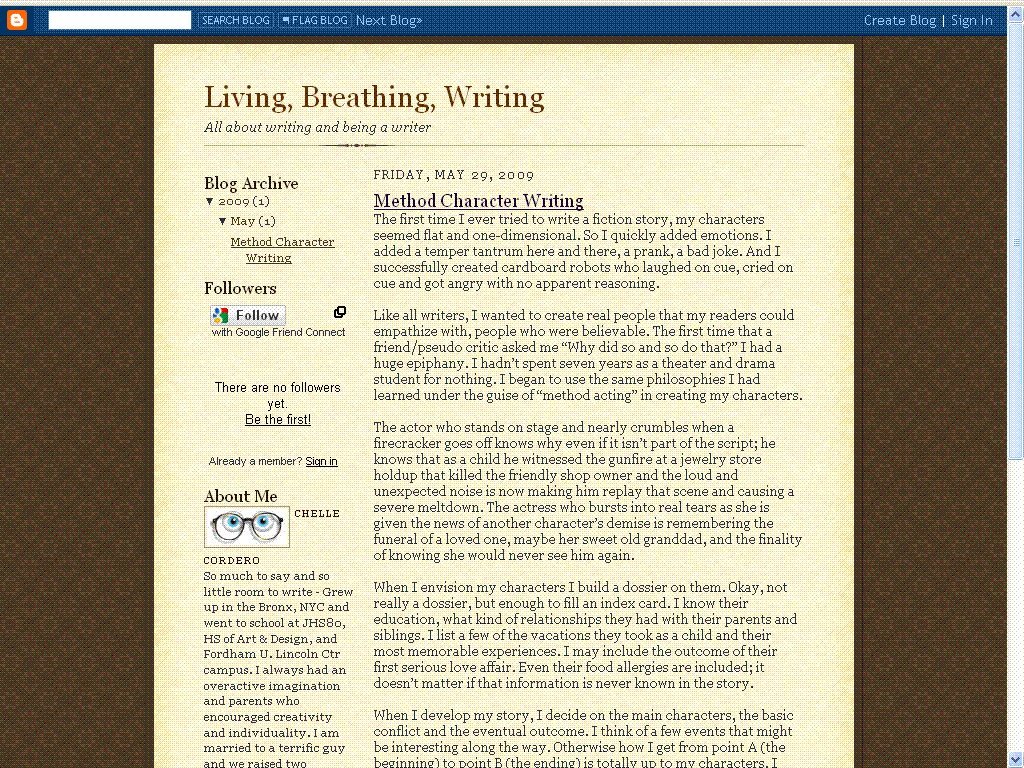
When I created my Amazon Kindle Blog in 2009, I named it to reflect my love of writing

Living, Breathing, Writing


The blog received lots of acclaim and there were several subscribers, but when my publisher and I noticed that a few would-be blog users complained that they didn't have a Kindle (the blog was not available on a PC) we decided to make some of the lessons available to them & created
Living, Breathing, Writing: A Lesson A Day, Volumes 1 & 2

Soon we responded to more demand and created the wildly popular 

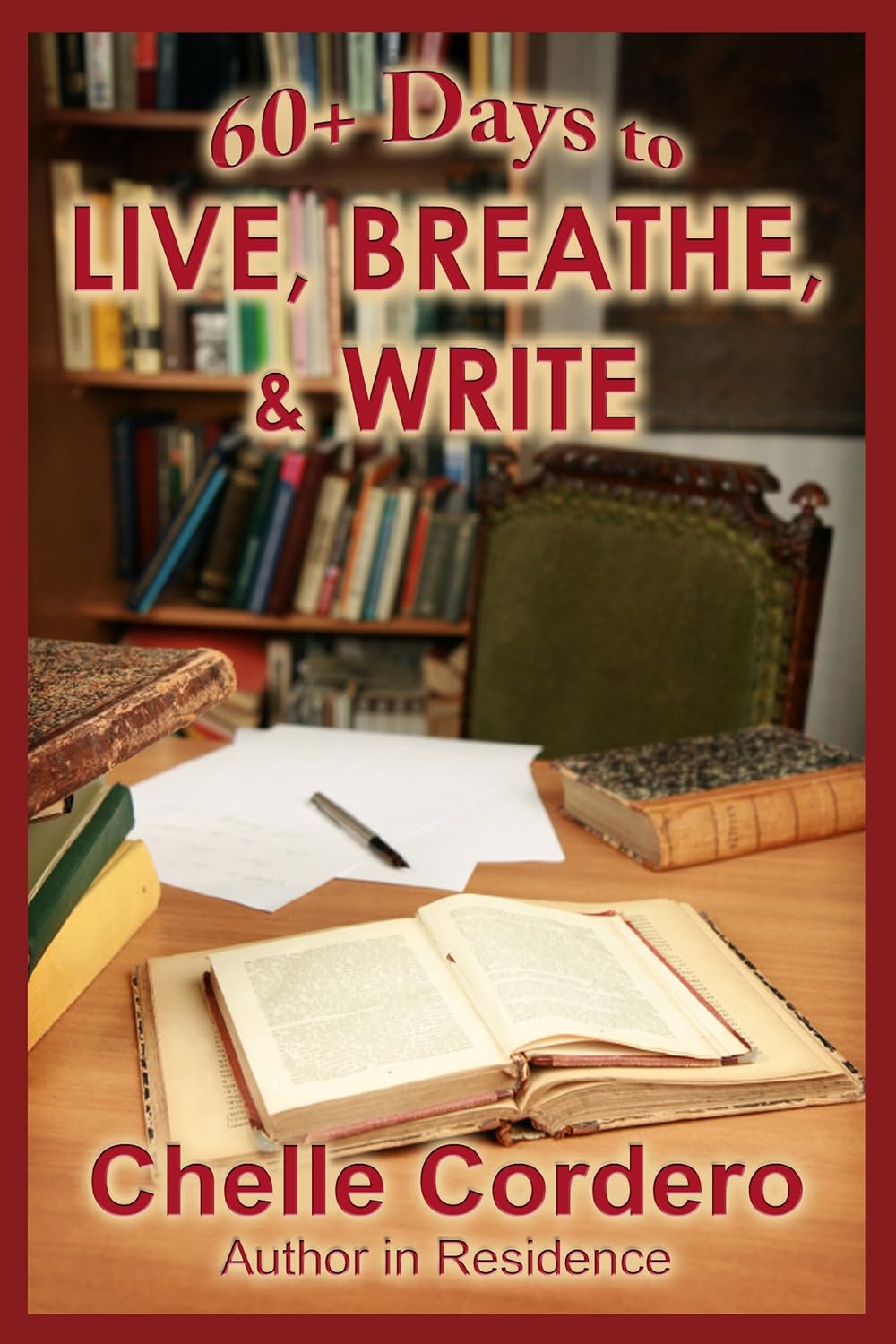
60+ Days to Live, Breathe, & Write

print a copy of this sheet


60+ Days to Live, Breathe, & Write
has been used in classrooms and libraries across the nation!


 Author in Residence by J.B. Naylor 

Having Chelle Cordero's blog on my Kindle is like having an author here in residence with me. She gives inspiration, motivation, and best of all, practical advice and solutions. I love the "writing exercises" she offers at the end of each blog, as well as the "writing prompts". I've already used them myself and with my 6th grade writing class!


Just Google Chelle Cordero's name and you will see that she knows what she is talking about - her byline has shown up on many articles all over the country in newspapers and magazines. And she has authored multiple novels and short stories as well.

This is a terrific chance to learn from a pro. Until now only a few have been able to attend a writing workshop led by Cordero because of location, now so long as you have access to the internet or a Kindle you can benefit from her amazing tips. Her workshops have been so helpful.


60+ Days to Live, Breathe, & Write
 is available in Kindle and
in Paperback from Amazon and Barnes & Noble


Thursday, November 13, 2014

A Sample From the Amazon Kindle Blog

Living, Breathing, Writing
[Kindle Edition]


Getting Emotional


Put your reader into the story by making them feel as if they are there. Let them feel emotion. Incite your readers to join you and to experience something through your words. If your reader feels an emotional attachment they will feel as if the words they are reading is reality.

Think of a time, any time, that your community has gone through a defining moment… preferably when you were there. Think of times like severe storms and natural disasters (up to and including hurricanes, tornadoes, floods, earthquakes, etc). If you have been fortunate enough not to have experienced a natural disaster, think of any incident that might have grabbed news headlines locally (i.e.: fires, accidents, lost child). Use any incident that affected you and your emotions. Choose an event that might have changed things whether for the better or worse, so long as the event made an impact on your community or yourself.

Make sure that the reader can identify with you as a real person. Let them know you have feelings, vulnerabilities, hopes and even fears. You’ll find that a reader will often put themselves in the place of a character, or alongside a character, if they believe it is a real person.

Try throwing yourself into the middle of the incident and write about it from your perspective; if you were in the middle of it, describe it from your perspective doing something different than what you did. Write this story in first person. Feel free to make yourself a hero or have the solution to a problem if you would like. Were you frightened, sad, or  angry? Don’t say it, show it in your actions. If the power went out and it was dark, mention the shadows, bumping into something or someone, or show how frustrated you were because you couldn’t see the exit or find something you needed without light.

Put feelings into retelling this story, reach deep into your readers’ emotions and let them “feel” as if they are right next to you and the events are happening now. Build tension with your words similar to the way filmmakers use background music building to a crescendo as forewarning of something to come. If the event is a storm you might talk about the increasing volume of the howling winds of the increasingly deafening roar of rain hitting the roof. Don’t add too much unnecessary description or be unnecessarily verbose or you will find that your readers will lose interest or get lost in confusing rhetoric.

One way to get emotional is to make a list of emotions that you felt during the event, or believe you would have felt if you were there or circumstances were different. For each emotion listed write down three things you did based solely on the emotion such as crying, slamming a door, covering your ears so you won’t hear, ducking under a table for protection or anything that was a pure emotional reaction. Make sure that you include these actions in your tale, but try NOT to name the emotion.


Writing Exercise:  Practice your point-of-view. Describe the room you are in at this moment and your actions from your point of view (first person: I see, I hear…); then describe the room from the viewpoint of someone standing in the doorway and watching YOU (third person: She sat rocking in the chair…) Remember that in third-person the person describing the room cannot be in YOUR head, they cannot know HOW you feel.

Writing Prompt: Write about your feelings (a.k.a. emotion) for each main color of the rainbow - red, yellow, green, blue and violet. Does any color make you think of a specific memory?

Kindle
Kindle Voyage
Kindle Paperwhite
Kindle Paperwhite (5th Generation)
Kindle (5th Generation)
Kindle Touch
Kindle Keyboard
Kindle DX
Kindle (2nd Generation)

*this twice weekly blog now features
Writing Exercises, Prompts
& Challenge Assignments


Wednesday, February 19, 2014

A Sample Lesson from 60+ Days to Live, Breathe, & Write


Look Who’s Talking Now…


Storytelling is done from a point of view, POV, and there are four choices the writer can choose to tell his story – 1st, 2nd, and 3rd limited or unlimited.

1st person narrative is told from the perspective of a major character. Like all perspectives this can be colored by emotions, fears, motive and misunderstanding. In other words, the perspective can be skewed and not necessarily the truth, but it is the way the character sees things.

The following is told in 1st person: "I was sitting and watching TV when Joe entered the room. He looked stressed and I tried to get him to calm down. Joe paced and refused to talk." Notice that Joe LOOKED nervous, but we weren’t told how he was feeling. In 1st person, the narrator only knows what he or she is seeing or hearing, but cannot get inside the other person’s head.

2nd person is least likely to be used in a work of fiction; you’ll find 2nd person in self help guides and instruction manuals. "You need to sit quietly and visualize a quiet beach. Think about the waves gently lapping at the shore." Or if it’s in a novel, it might read, "You could almost hear the silence after Brenda made her announcement. Seeing the pain on the groom’s face just makes you want to hide."

2nd person point of view talks directly to the reader. It would be difficult to maintain a storyline effectively using 2nd POV especially something as lengthy as a novel.

3rd person limited tells the story from a character’s point of view, but only one character at a time (scene or chapter) The writer can share the emotions and senses of that character from within the mind, but when talking of other character’s reactions it is only what the first character sees or hears.

John was overtired and frustrated as he watched Rachel pouring another drink. Rachel smiled as she handed him the drink, but he could see the smile didn’t reach her eyes. Somehow he would find out what she was thinking, but in the meanwhile he was going to enjoy having her company for the evening.

The reader only learns what is in "his" head and what his feelings are. We know that Rachel seemed phony only because that was the way it looked to John.

3rd person unlimited allows us to move from head-to-head to see the action from each ones point of view. This method is most like watching a movie where the reader has a chance to learn the different perspectives. A writer has to be careful how quickly he "head-hops" so as not to confuse the reader.

Dan wanted to convince her to stay with him. "I promise you’ll be safe." He was willing to put his life on the line for her. Janet was wary. He had no idea how guilty she was feeling, she knew she had brought this on herself.

"I can’t let you put yourself in danger."

"But I would do anything for you." Right now all Dan could think about was wrapping his arms around her and never letting go.

Beginning writers are cautioned to remain consistent with whatever POV they choose to write in. There are times when combining different points of view helps to tell your story. In my novel Final Sin I used 3rd person unlimited for all of my major characters, but I had the unknown murderer appear now and then in 1st person. Since the villain was mentally ill, his point of view was skewed as only he could see things.


Writing Exercise:  Imagine that you are meeting, for the first time, with a friend who you haven't seen for at least 10 years - write approximately 3 paragraphs telling us about your conversation. Do a little bragging about your own accomplishments.

Writing Prompt:  Finish these sentences: 1) My greatest flaw… 2) No one… 3) My worst fear is… 4) I was arrested because… 5) My worst day began with…

60+ Days to Live, Breathe, & Write by Chelle Cordero

60+ Days to Live, Breathe, & Write

Due to demand and the overwhelming desire of her readers for more great information about being a successful and productive writer, Chelle Cordero and Vanilla Heart Publishing present 60+ Days to Live, Breathe, & Write – previously published as Living, Breathing, Writing, Volumes 1 and 2. This combined collection gives both the aspiring writer and the accomplished writer two complete months of lessons about the craft of writing and being a writer, from time management to social networking, organizing queries to publication, the business of being a writer, and more. Includes more than 100 brain-starting exercises, business activities, and prompts to help you get those words on paper, and create your successful writing career. These short lessons and activities have been previously published as part of the acclaimed Amazon Kindle blog Living, Writing, Breathing available by subscription for Kindle owners, and consistently in the Top 100. Make the writing life the life for you! These hints, tips, essays, lessons, and activities for new and established writers cover such subjects as Querying, Marketing, Grammar, Dialogue, Blogging, Finances for Writers, Expanding Your Readership, and more! Chelle Cordero's experience as both a multipublished novelist and long-term freelance journalist, in addition to her successful Kindle Blog, Living, Breathing, Writing, will give you information and ideas... activities to spark your imagination, 'up' your writing game, develop your skills, and guide you through the business of writing and being a writer.