Showing posts with label fatigue. Show all posts

Wednesday, March 17, 2021

JUST TIRED!


Have you ever had one of those days when you are just too tired to do anything?


Who hasn’t?!


This past year, especially since March 2020, the COVID pandemic has thrown almost everyone’s life askew and many of us are just plain, darn tired of the isolation, restrictions and of course the news of so many deaths (more than half-a-million!). But how do you know if your “tiredness” is more than just being TIRED?


Being tired can be a momentary feeling, listlessness can be a simple as a common cold, or it can be a feeling as if you are banging up against a brick wall with no hope of saving yourself. You are the one that knows yourself best, but that does not mean that you are the only one who can save yourself. Know the signs of burn out and depression.


Do you feel as if you have NOTHING to look forward to, as if life has simply left you behind? Do you have difficulty in finding any enjoyment in things you once looked forward to? Do you find that you just don’t care anymore? Do you find it impossible to complete the simple tasks you once were able to breeze through? And do you find yourself using crutches like alcohol, drugs or behavior you wouldn’t normally do? Is it difficult to sleep nights, or do you wake up feeling as if you haven’t slept at all? Do you feel sad as well as fatigued?


All cases of severe tiredness and fatigue, especially when you can answer YES to a number of the questions above, should never be ignored. Medically there are a number of reasons why you may be feeling so overtaxed and washed out — don’t ever let a doctor dismiss your symptoms. There are conditions which can affect your blood, your bones, and your mental well-being that MIGHT be affecting you, even your medications might be causing a problem. A full examination and blood-workup might be recommended, so speak to your doctor. (And from my own experience, if the doctor simply laughs and says it’s all in your head without checking you out… get another doctor!)


If no physical reasons are found, there is the possibility that you are depressed AND THERE IS NO STIGMA TO SEEKING HELP. While momentary disappointments may be easy to bounce back from, severe depression isn’t. As mentioned above, this past year has been extremely hard on a lot of us; in addition to the pandemic and the financial and social problems it’s caused, our country also went through a very contentious political battle, and social dissension, no matter what the cause, adds to stress. It’s very important to talk and communicate with others, especially professionals, and to make healthy lifestyle choices in your eating habits, exercise, and sleep.


There are several support help-lines that will allow you to speak with professional counselors as well as support groups, group counseling and individual counseling services available. Very often your insurance will help cover a portion of any expense you might incur. You can also find tele-therapy with licensed doctors that charge only minimal fees even if you don’t have insurance. Local hospitals and clinics can help put you in touch with the resources you need to help you climb out of your depression.


The following resources are just a few and no endorsement is implied:

 If you are a veteran, call the Veterans Crisis Line at 800-273-TALK and press 1 (or chat online at www.VeteransCrisisLine.net).  

 If you or someone else is having thoughts of suicide, call 911 or the Suicide Lifeline at 1-800-273-8255 (available 24/7).

Teen-to-Teen Peer counseling is available at 877-YOUTHLINE (WWW.HOPELINE.COM)

AARP lists the Disaster Distress Helpline at 1-800-985-5990 or text TalkWithUs to 66746 for crisis counseling and support for anyone in the U.S. experiencing distress or other behavioral health concerns.
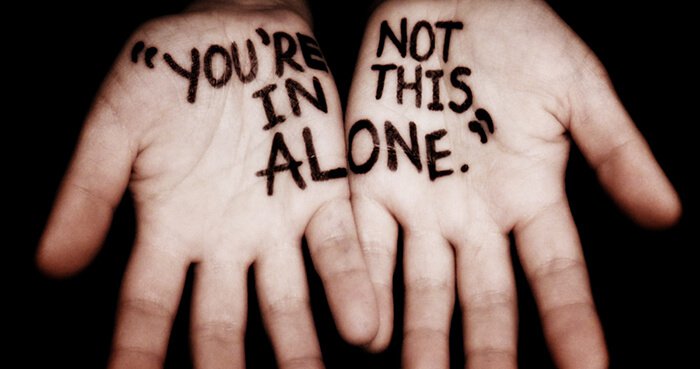


Monday, October 17, 2016

Being Invisible ~ #MondayBlogs


There are those of us who hide invisible illness, chronic conditions, pain and fatigue as much as we can. No matter how we hide sometimes it is unavoidable and it’s frustrating when the invisibility turns you into what others may assume is a hypochondriac or just lazy. We function at home, in jobs, with our families or running errands around town, and we don’t look for excuses…

But sometimes the pain or fatigue gets to us and we need a little time to recoup, to rest, to let an analgesic help a bit, or to simply catch our breath and those are the times when someone, usually well meaning, comes along and suggests that perhaps we should get to bed earlier, or keep moving to stretch the muscles, or not need so many bathroom breaks, and many more bits of advice. The truth is that no one else, unless they’ve been there, understands what we go through and sometimes it actually hurts when they tease and call us lazy or slow. These same people do mean well but unless they see a cane, a wheelchair, a placard in our car window or other aids to help a person function, they just don’t understand.

None of us wants to wear a banner across our chests or announce to perfect strangers what our invisible condition may be. Our invisible conditions aren’t contagious (if they are we know how to protect the people around us), they don’t make us any less of a functioning and contributing adult; some children also suffer from invisible conditions. These syndromes can make us weak, cause pain, make us dizzy, short of breath, hungry, thirsty, and make us so tired we can’t keep our eyes open. Most times we manage our symptoms and if we are lucky some of us can even forget for a brief period that we have a “condition” — maybe that’s why it’s so easy for others not to realize that sometimes the symptoms do get the best of us.

The following is not a complete list but includes some of the types of conditions that are not obvious to others: depression, anxiety, Ehlers Danlos Syndrome, Epstein Barr, Chronic Fatigue, Fibromyalgia, Celiac Disease, diabetes, cardiac abnormalities, migraines, Crohn’s disease, narcolepsy, food allergies, arthritis, PKD, hypoglycemia, colitis, IBS, epilepsy, Lyme Disease, Lupus, asthma, Meniere's Disease, phobias, hyper/hypo-active thyroid, and many more. Most laypeople reading this partial list will not be familiar with most, if any, of these conditions. There are even several doctors who are unfamiliar with the presenting symptoms and there is often misdiagnosis. Sometimes the patient is even told that it is all in his/her mind.

While many with chronic conditions have developed coping skills and can manage work and other activities with little interruption, some people do need extra consideration, and some cannot manage to take care of their home without help or hold down jobs. According to the Americans with Disabilities Act of 1990 (ADA) “an individual with a disability is a person who: Has a physical or mental impairment that substantially limits one or more major life activities; has a record of such an impairment; or is regarded as having such an impairment.” There may be provisions to help an individual but many of us know that if we let a potential employer know that there may be days we won’t be up to doing our jobs the chances of being hired go down, so we don’t put our invisible condition on record. …when we call out sick too many days, well you have an idea of what happens.

The next time you see someone waiting for an elevator just to go one floor, or parking in a handicapped spot (WITH a proper placard) but doesn’t “appear” disabled, or someone asks for help to carry something (and you can help), or even just walks slowly, please don’t be so quick to criticize. Realize that maybe that person coming out of the handicapped stall in the bathroom needed the higher seat because of a back problem. And just because you saw your co-worker dancing at the holiday party it doesn’t mean that he/she can do the walking at the company golf-outing, it just may be an off day. While admittedly there will always be someone who cheats and takes advantage, most people do what they are capable of and know when they need a little help. While some people with an invisible illness may feel comfortable in letting you know about it, they are not obligated to prove anything to you.

To your health!

...